Innovate in shipbuilding and marine technology. Shipyards and marine‑systems companies in the U.S. are advancing hull designs, propulsion systems, autonomous marine vessels, corrosion‑resistant materials and maritime automation. Many of these activities qualify for the federal R&D Tax Credit under IRC §41, with state incentives also available.


Examples of qualifying activities in shipbuilding & marine manufacturing
- Advanced Hull & Propulsion Design Testing new hull‑form geometries for drag reduction, alternative fuel propulsion (LNG, hydrogen), or new propeller/foil configurations.
- Materials Innovation & Corrosion Mitigation Developing new alloys, coatings or composites to resist saltwater corrosion, biofouling, fatigue and extend vessel lifespan.
- Autonomous & Marine Automation Systems Developing navigation algorithms, autonomous vessel control systems, sensor integration for unmanned craft, or remote monitoring systems.
- Marine Systems & Sub‑systems Development Creating new cargo‑handling systems, ballast‑water treatment innovation, energy‑efficient HVAC for vessels, or modular ship‑block manufacturing techniques.
- Sustainability & Efficiency Projects Trialing hull‑surface treatments, energy‑recovery systems, hybrid‑diesel/electric propulsion, or integrating alternative fuels into marine systems.
What qualifies as R&D in Shipbuilding & Marine?
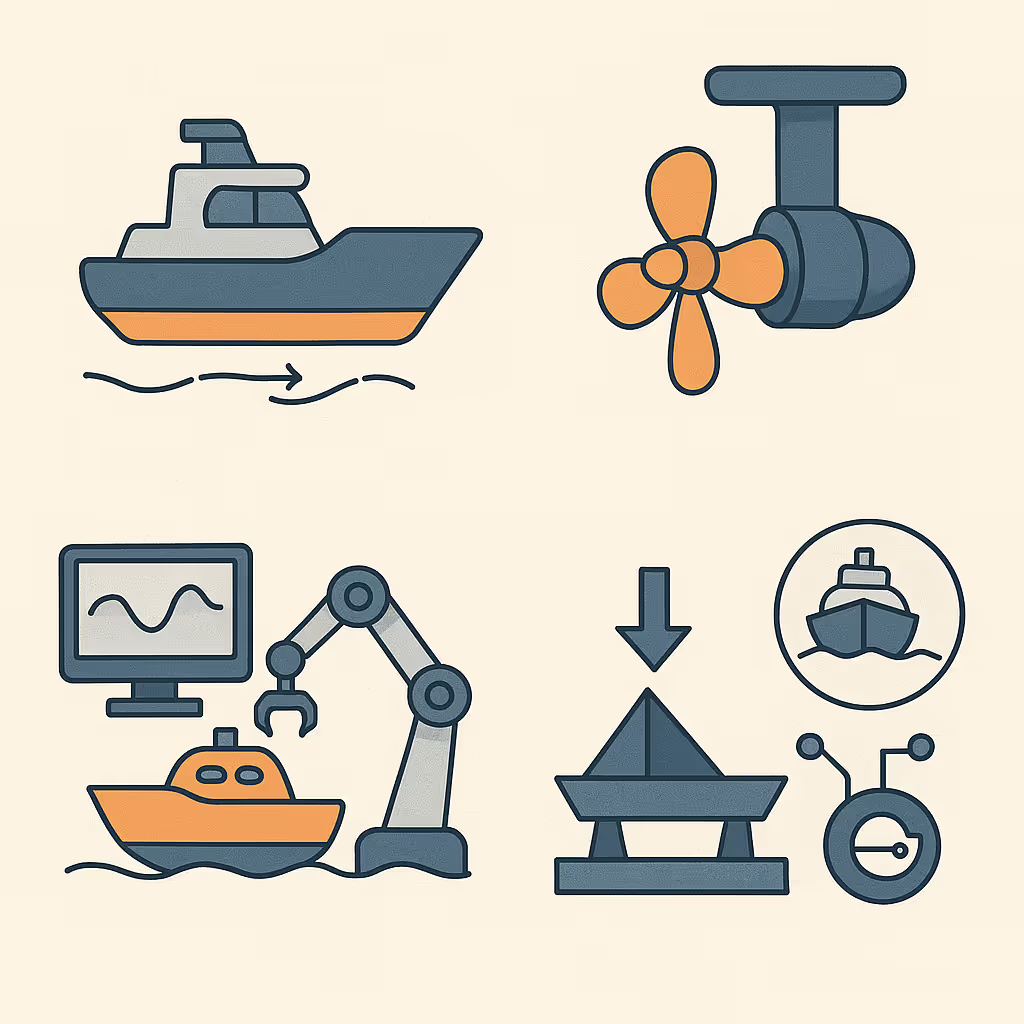
To qualify, activities must:
- Pursue a permitted purpose such as developing a new hull form, marine propulsion system, corrosion‑resistant alloy, autonomous marine craft or ship‑automation system
- Address technical uncertainty about capability, method or design in naval architecture, marine engineering, materials science, or control systems
- Follow a process of experimentation through prototype hull tests, propulsion system trials, material fatigue testing or autonomy validation
- Be technological in nature, grounded in marine engineering, structural engineering, materials engineering or software/automation systems
Qualified Research Expenses (QREs)
Roles commonly involved in qualifying activities
- Naval architects and marine structural engineers
- Materials scientists focused on corrosion, fatigue, composites
- Software engineers and automation experts for marine systems
- Mechanical/electrical engineers working on propulsion, sensor integration, energy systems
- Research partners, labs, prototype ship‑block fabrication facilities
What does not qualify
- Routine shipbuilding or vessel manufacturing without experimental research
- Applying standard vessel designs without modification or testing
- General management, marketing or administrative tasks
- Capital‑asset purchases not tied to research experimentation
Compliance and Documentation
Following the One Big Beautiful Bill Act (OBBBA) signed July 4, 2025, §174 now allows immediate expensing of domestic research expenses for tax years beginning on or after January 1, 2025. Taxpayers may also elect optional amortization under new §174A. Foreign research expenses must still be amortized over 15 years. This is separate from the §41 credit but impacts overall tax planning.
- Project briefs with marine‑innovation goals, test plans, simulation runs
- Hull‑test logs, propulsion‑trial data, sensor/automation validation results
- Comparative metrics vs baseline, design iteration logs
- Employee time records, role descriptions, time allocation to research
- Demonstration of the four‑part test under §41
Frequently Asked Questions
Yes — if they are engaged in development of new hull forms, marine propulsion, materials, autonomy or other technical systems rather than only production.
Wages of engineers and scientists, test materials, simulation software, contract research in labs or marine‑test facilities.
Shipyards, marine‑systems manufacturers, autonomous vessel developers, propulsion‑innovation firms and marine‑materials suppliers can qualify when actively innovating.
Routine production of vessels or standard upgrades without technical uncertainty or experimentation, non‑technical roles, standard equipment purchases.
Savings depend on project scope; companies can claim a meaningful fraction of qualified research expenses if properly documented.
Keep logs of prototype hull trials, sensor integration trials, automation runs, material‑testing data, simulation outputs, and employee‑time records tied to experimentation.
Next Steps

Use our calculator to estimate your potential federal and state benefits

Schedule a consultation to structure your row crop research activities
If you are innovating in agriculture, you may already be doing R&D. Let's make sure you are rewarded for it.
Contact Strike Tax Advisory
Ready to maximize your R&D tax credits? Get in touch with our team of experts.

How much could I get back for
Shipbuilding & Marine
?