Drive packaging‑innovation across food and consumer goods. Packaging companies are constantly adapting to new materials, formats, sustainability mandates, production automation and regulatory demands—many of which qualify for the federal R&D Tax Credit under IRC §41 and state incentives.


Examples of qualifying activities in packaging & consumer goods
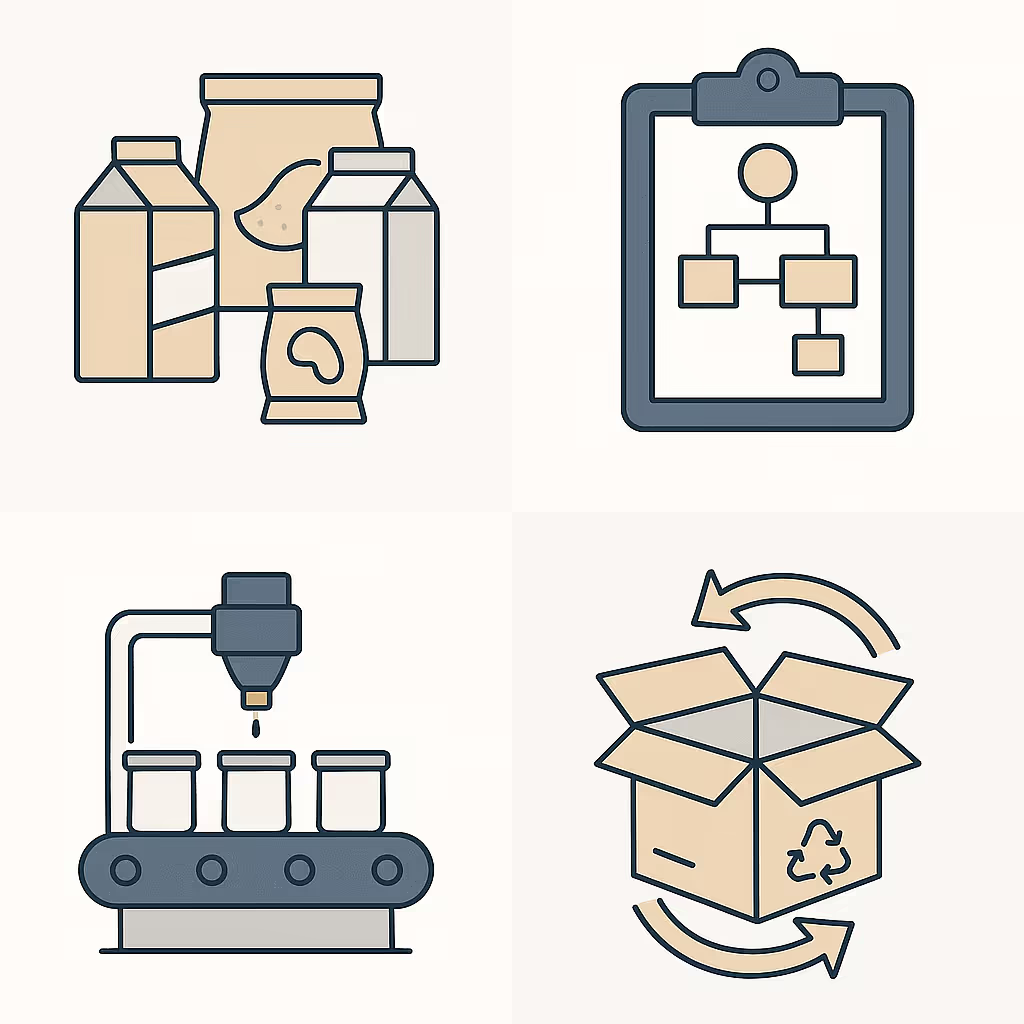
- Packaging Format & Material Trials Testing new pouch formats, multi‑wall cartons, barrier films, compostable materials, shelf‑life performance under accelerated aging, puncture and seal strength tests.
- Automated Line & Process Innovation Integrating robotic pick‑and‑place systems, quick‑change tooling for flexible runs, automatic inspection for contaminants, reducing downtime for SKU change‑overs, pilot runs of new machinery/lines.
- Product‑to‑Package Adaptation Adapting packaging for new product formulations (e.g., increased viscosity sauces, functional beverages), redesigning pump/dispense systems, validating cleaning/change‑over protocols, throughput optimisation.
- Sustainability & Material Innovation Developing lightweight packaging, recycled content films, enhanced exit‑gas or oxygen‑scavenging films, waste‑reduction design, pilot tests of new materials in high‑throughput lines.
What qualifies as R&D in Food & Consumer Packaging?
To qualify, your packaging‑industry activities must:
- Pursue a permitted purpose — such as a new or improved packaging format or container, novel barrier film, faster/flexible fill or sealing process, waste‑reduction design, or sustainability‑driven material change.
- Address technical uncertainty — for example: “Can the new biodegradable film maintain shelf‑life under high humidity?”, “Will a new filling/sealing station handle multiple SKUs at high speed without increased scrap?”, “Can we redesign the packaging line to reduce material usage while preserving integrity during shipping?”
- Follow a process of experimentation — pilot runs, lab film trials, line trials, alternate materials or geometries, simulation modelling, tooling redesign or process conversion.
- Be technological in nature, grounded in materials science (films, coatings, substrates), mechanical/automation engineering, packaging science, sensor/vision inspection, or manufacturing engineering.
Qualified Research Expenses (QREs)
For packaging and consumer goods R&D the IRS recognises:
Roles commonly involved in qualifying activities
- Packaging/material engineers designing new container formats or films
- Automation/control engineers integrating robotics, sensors, vision inspection for packaging lines
- Product‑development scientists handling product‑to‑package interface (viscosity/fill behaviour/settling)
- QA/R&D technicians conducting pilot runs, cleaning validation, line change‑over trials
- Process engineers working on throughput, change‑over time, scrap reduction, scalability
- External research labs or material science partners testing new films, barrier properties, coatings
What does not qualify
- Routine packaging runs without experimentation or improvement (e.g., repeating the same format without change)
- General business functions like sales, marketing, administration or order‑fulfilment
- Applying a known packaging system to a standard product without technical uncertainty (i.e., no experimentation)
- Land acquisition, building expansion, or standard machine purchases for scale‑up not tied to a documented research program
Compliance and Documentation
Following the One Big Beautiful Bill Act (OBBBA) signed July 4, 2025, §174 now allows immediate expensing of domestic research expenses for tax years beginning on or after January 1, 2025. Taxpayers may also elect optional amortization under new §174A. Foreign research expenses must still be amortized over 15 years. This is separate from the §41 credit but impacts overall tax planning.
Documentation remains essential — packaging businesses should maintain:
- Project briefs with objectives (e.g., “Test new 40% lighter film while preserving seal strength over 12 months”)
- Pilot‑line layouts, run conditions, change‑over logs, scrap/waste outcomes, yield comparisons
- Time‑tracking records for R&D staff, payroll logs tied to research
- Material test reports (barrier, puncture, seal strength), version logs of tooling/film, failed tests (yes, even failures count)
- Pilot trials, line change‑over experiments, ROI/yield before‑after metrics Strong documentation supports the §41 four‑part test (permitted purpose, technical uncertainty, process of experimentation, technological in nature) and prepares you for audit readiness.
Frequently Asked Questions
Yes — if your operation is working on new or improved packaging formats, materials, fill/seal systems, automation or sustainability innovations, rather than standard production.
Wages of R&D and trial staff, supplies consumed in experimentation (film, prototype packaging), software/data analytics used for research, third‑party contractor services tied to qualified research.
Examples include: trialling new barrier films that reduce material weight while maintaining shelf‑life; adapting packaging lines for multi‑format SKUs with automation; testing compostable containers in high throughput lines; upgrading inspection systems to reduce defects.
Routine packaging without change/experimentation; simple format or colour changes; standard manufacturing machine purchases not tied to a documented trial; marketing, sales, administrative tasks.
Varies by size and scope; sources indicate credits up to ~22% of qualified research expenses when properly documented.
Maintain detailed project hypotheses (e.g., “Can the new pouch maintain 18‑month shelf life at 98% RH and 40 °C while reducing film weight by 30%?”), pilot‑run logs, time‑tracked R&D payroll, version histories, material test certificates, change‑over logs, scrap/yield before‑after metrics.
Next Steps

Use our calculator to estimate your potential federal and state benefits

Schedule a consultation to structure your row crop research activities
If you are innovating in agriculture, you may already be doing R&D. Let's make sure you are rewarded for it.
Contact Strike Tax Advisory
Ready to maximize your R&D tax credits? Get in touch with our team of experts.

How much could I get back for
Food & Consumer Packaging
?