Maximize innovation in civil engineering. Civil engineering firms across the U.S. routinely engage in new structural systems, infrastructure techniques, geotechnical methods and complex project‑delivery innovations. Many of these efforts qualify for the federal R&D Tax Credit under IRC §41, with state‑level credit opportunities often available too.


Examples of qualifying activities in civil engineering
- Advanced Geotechnical Systems Testing new foundation systems, deep‐soil mixing, pile designs in challenging soils or novel retaining systems.
- Infrastructure Materials Research Developing high‑performance concrete mixes, ultra-high‑strength composites, self‑healing materials or new reinforcement methods.
- Hydraulics & Drainage Innovations Experimenting with new stormwater conveyance, flood mitigation systems, scour protection for bridges, or hydraulic modeling of extreme events.
- Bridge & Tunnel Systems Testing new structural configurations, cable‑stay variations, modular tunnel liners, seismic‑resistant detailing or accelerated construction methods.
- Transportation & Highway Systems Using sensor networks, smart pavement materials, dynamic traffic modelling or alternative construction sequencing to reduce downtime or environmental impact.
- Sustainability / Resilience in Infrastructure Designing resilient systems for climate change, extreme weather adaptation, low‑carbon materials, modular infrastructure deployment or lifecycle‑optimized structures.
What qualifies as R&D in civil engineering?
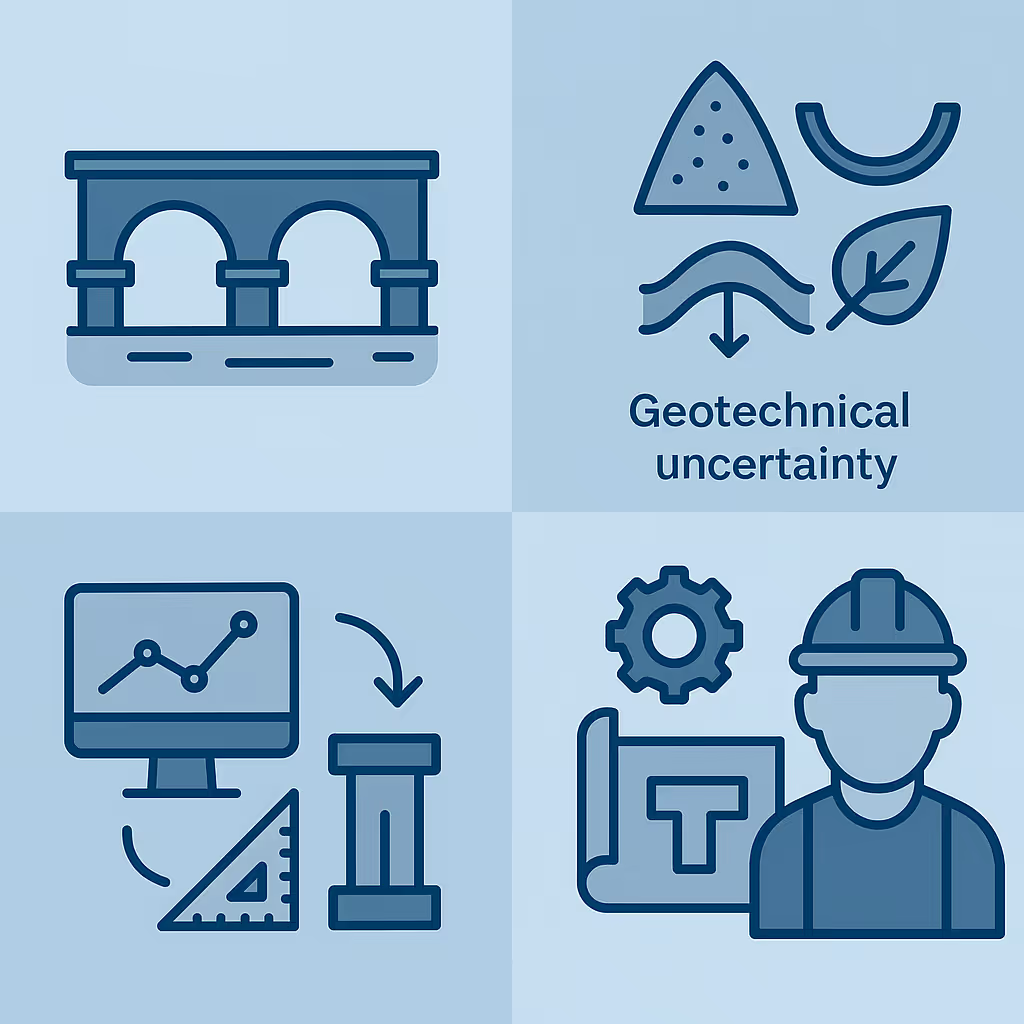
To qualify, activities must:
- Pursue a permitted purpose such as a new or improved infrastructure element, process, or method (bridge, tunnel, roadway, foundation system)
- Address technical uncertainty about how to build, design or execute that component (e.g., geotechnical conditions, load behaviour, environmental impact)
- Follow a process of experimentation via modelling, simulation, physical testing, or prototype/field trials
- Be technological in nature, grounded in structural engineering, geotechnical engineering, hydraulics, materials science or civil systems engineering
Qualified Research Expenses (QREs)
Roles commonly involved
- Geotechnical & structural design leads pushing new methods
- Infrastructure materials scientists and specialists
- Field trial coordinators and monitoring engineers
- Simulation/modeling analysts working on civil systems
- Research labs in materials, instrumentation, geotechnical collaboratives
What does not qualify
- Routine civil engineering designs using known methods or typical code‑compliant solutions without experimentation
- Standard project execution or administration tasks (e.g., scheduling, permitting, routine structural calculations)
- Construction alone if no innovation or technical uncertainty is being resolved
- Land acquisition, site procurement or purely aesthetic design (no technical uncertainty)
Compliance and Documentation
Following the One Big Beautiful Bill Act (OBBBA) signed July 4, 2025, §174 now allows immediate expensing of domestic research expenses for tax years beginning on or after January 1, 2025. Taxpayers may also elect optional amortization under new §174A. Foreign research expenses must still be amortized over 15 years. This is separate from the §41 credit but impacts overall tax planning.
Documentation best practices for civil engineering firms include:
- Project narratives explaining technical uncertainty (e.g., unusual soil conditions, new structural form, new material behaviour)
- Design iteration records, simulation results, sensor/trial data, monitoring logs
- Time‐tracking assigned to research tasks vs standard design tasks
- Contracts or scope that show the taxpayer retains rights and bears risk of research outcome Maintaining clear records helps assert compliance under the IRS “four‑part test.”
Frequently Asked Questions
Yes — when they engage in technical innovation such as new foundation methods, instrumentation for infrastructure, novel materials, or advanced simulation of civil systems, firms may qualify.
Wages tied to experimental civil engineering tasks, advanced materials/supplies used in trials, software/cloud for modelling, and contract research expenses.
Examples: geotechnical innovations, structural system redesigns, advanced drainage/flood systems, smart infrastructure modelling, modular infrastructure methods.
Standard engineering services without risk/uncertainty, typical construction methods, design simply repeating known solutions, land/site purchase.
Track experiments and iterations, simulation results, prototype/field trial data, employee time on research tasks, material test reports, and clearly link them to research objectives.
Savings vary widely based on size and scope. Many civil engineering firms can capture tens of thousands of dollars in credits annually when research activities are well‑documented; larger firms with portfolio of innovative projects may capture substantially higher amounts.
Next Steps

Use our calculator to estimate your potential federal and state benefits

Schedule a consultation to structure your row crop research activities
If you are innovating in agriculture, you may already be doing R&D. Let's make sure you are rewarded for it.
Contact Strike Tax Advisory
Ready to maximize your R&D tax credits? Get in touch with our team of experts.

How much could I get back for
Civil Engineering
?