
Industrial Hemp & CBD R&D Tax Credits
In the dynamic industrial hemp and CBD sector, where genetic engineering of high-yield, low-THC strains, advanced supercritical extraction methods, and innovative bioavailability enhancements fuel wellness innovations and sustainable biomaterials, your R&D activities qualify for substantial federal and state tax incentives under IRC §41. These dollar-for-dollar credits reimburse experimentation in cannabinoid profiling, solvent-free processing, and stable emulsion formulations that meet FDA and USDA standards while maximizing therapeutic potency.
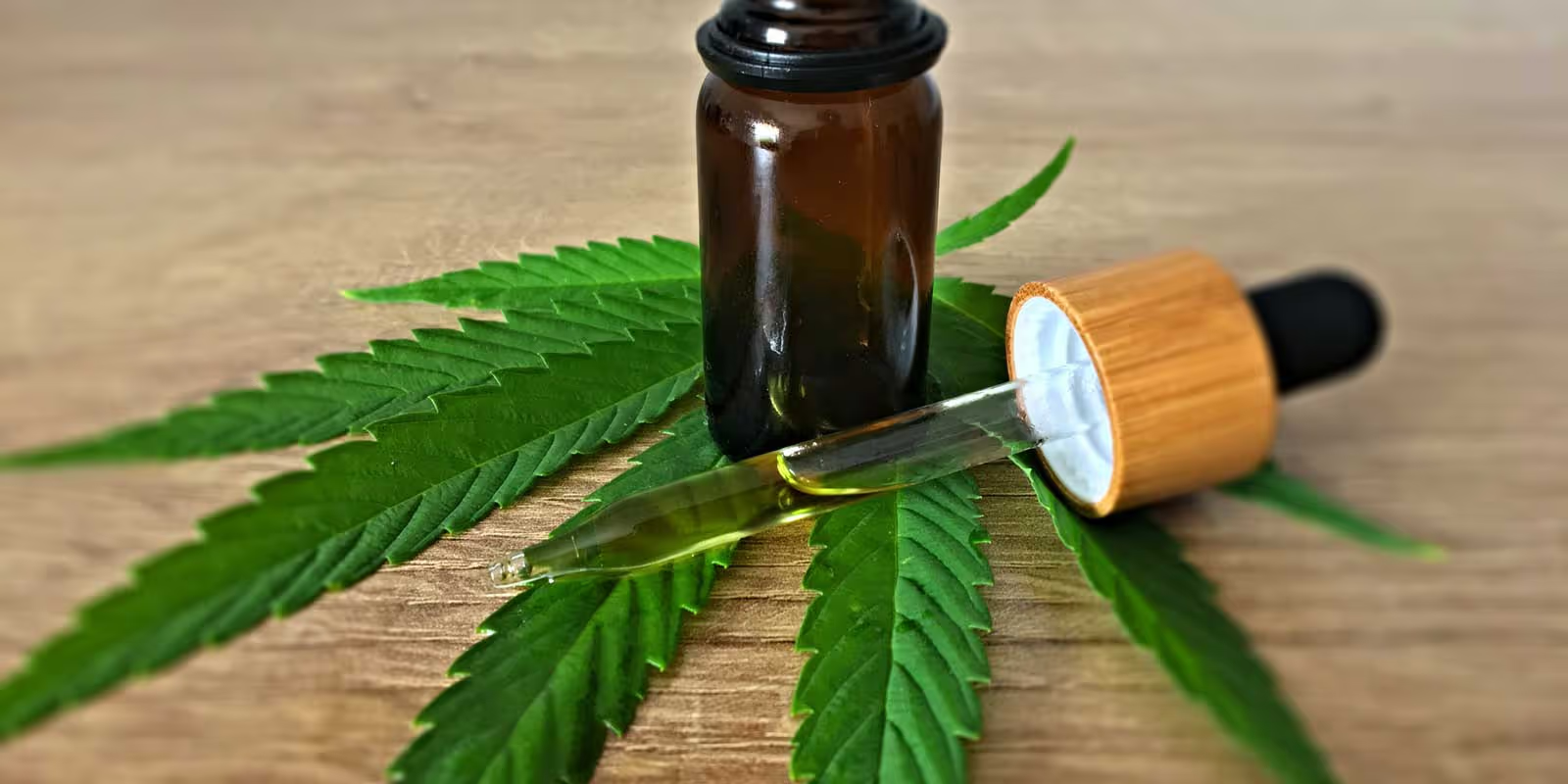

Examples of Qualifying Activities in Industrial Hemp & CBD
- Strain Breeding and Genetic Selection Crossbreeding Cannabis sativa variants to develop cultivars with elevated CBD concentrations and minimal THC, using marker-assisted selection and field trials to evaluate heritability under diverse soil and climate conditions while adhering to 0.3% THC limits.
- Extraction Process Optimization Iterating on CO2 extraction parameters, such as pressure and temperature gradients, to improve terpene preservation and cannabinoid yield from hemp biomass, addressing uncertainties in solvent residue removal for food-grade purity.
- Formulation Development for Delivery Systems Experimenting with liposomal encapsulation or nano-emulsification techniques for CBD oils, testing stability and absorption rates in simulated gastrointestinal models to enhance bioavailability without altering sensory profiles.
- Potency Testing and Quality Assurance Protocols Validating high-throughput HPLC methods for cannabinoid quantification in raw extracts, refining calibration curves to detect trace impurities and ensure compliance with third-party lab standards for product consistency.
- Sustainable Cultivation Techniques Prototyping vertical farming systems with LED spectrum adjustments and hydroponic nutrient formulations to boost hemp biomass productivity, evaluating water use efficiency and pest resistance through controlled greenhouse experiments.
- Seed-to-Sale Traceability Software Integration Developing blockchain-enabled algorithms for real-time monitoring of harvest-to-processing data, testing data integrity protocols to resolve uncertainties in supply chain verification for regulatory audits.
What Qualifies as R&D in Industrial Hemp & CBD
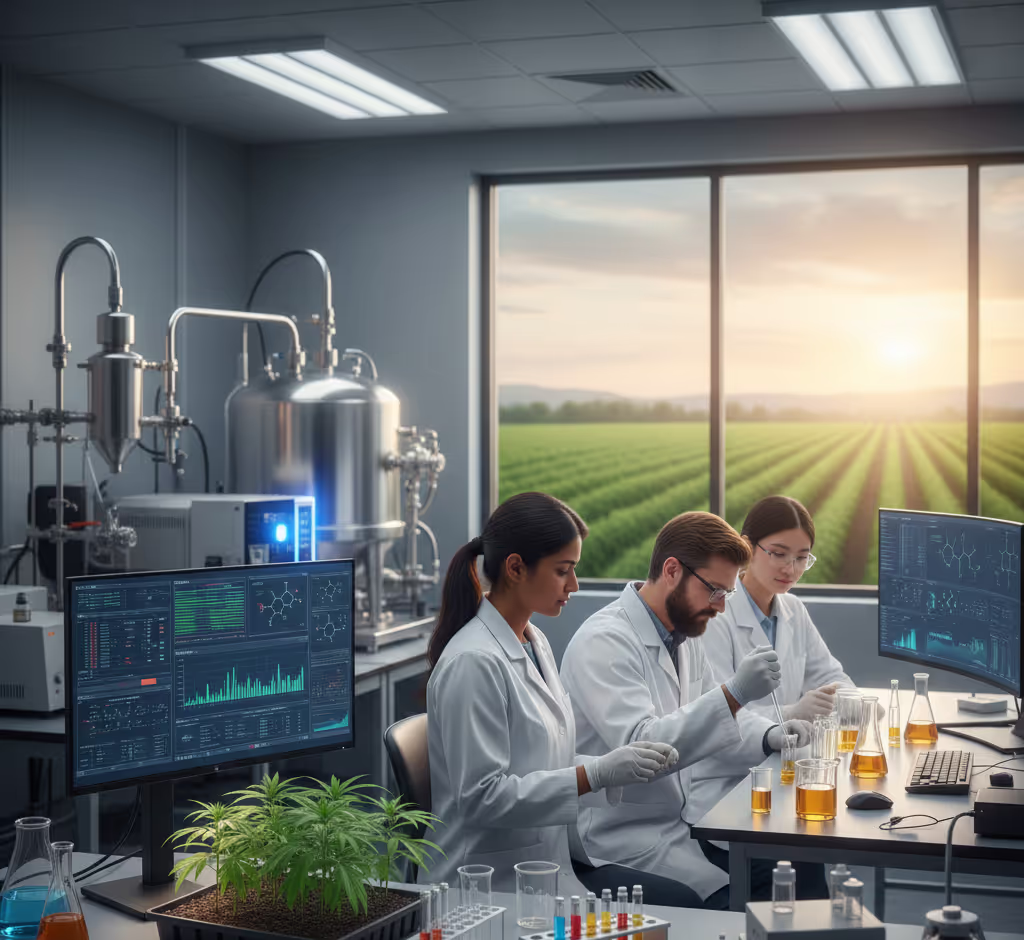
Your projects may qualify if they:
- Pursue a Permitted Purpose: Seek to develop or enhance products, processes, or software for superior performance, reliability, or quality, such as creating stable CBD-infused topicals with extended shelf life or refining decarboxylation methods for higher potency retention.
- Address Technical Uncertainty: Confront challenges like "Can we engineer a hemp strain yielding 20% CBD under saline soils?" or "Will ultrasonic-assisted extraction reduce energy inputs by 30% without compromising isolate purity?" Technical uncertainty involves unresolved scientific or engineering outcomes.
- Involve Experimentation: Employ lab assays, pilot-scale trials, statistical modeling, or iterative formulations to test hypotheses and alternatives. Experimentation requires systematic evaluation of options through data-driven adjustments.
- Rely on Hard Sciences: Leverage botany, organic chemistry, agronomy, or bioinformatics, excluding routine harvesting or consumer surveys.
Key Details
These criteria align with IRS standards for agriculture and biotech sectors, including hemp cultivation and CBD processing. For grant-funded work, qualification holds if you retain substantial rights and assume financial risk, avoiding funded research exclusions under §41. The IRS assesses documentation for evidence of uncertainty, experimental design, iterations, and scientific foundations.
Qualified Research Expenses (QREs)
Key Details
These QREs often generate federal credits of 6 to 10% based on the regular or alternative simplified method, plus state enhancements. Hemp and CBD firms typically accumulate high QREs from iterative lab and field work. Calculate against historical baselines, apply §280C reductions, and track precisely to maximize R&D tax credit benefits, especially for VC-backed startups navigating cash flow constraints.
Common Roles Involved
- Botanists and agronomists trialing cultivation variables
- Chemists and extraction specialists optimizing processing yields
- Software developers building traceability platforms
- Quality control scientists validating potency metrics
- C-suite leaders directing innovation pipelines
- Master growers and consultants prototyping facility designs
- PhDs and data analysts modeling genetic outcomes
Key Details
These positions mirror standard hemp and CBD R&D workflows in breeding, processing, and product scaling. Support functions, such as lab technicians preparing samples, qualify when linked to core experimentation. Even outsourced experts count via contract expenses.
What does not qualify
- Standard farming or harvesting with proven techniques
- Routine quality inspections or reverse-engineering existing strains
- Marketing, sales, or general administrative duties
- Facility expansions not tied to experimental trials
- Funded projects lacking substantial rights retention (e.g., fully sponsored grants)
- Cosmetic packaging changes or minor efficiency adjustments without scientific testing
Key Details
A frequent myth is that all hemp activities fall under §280E restrictions post-Farm Bill, but only THC-exceeding cannabis does; legal hemp and CBD R&D fully qualifies. Prioritize documented innovation to sidestep IRS disallowances.
Compliance and Documentation
§174 Update
Following the One Big Beautiful Bill Act (OBBBA) signed July 4, 2025, §174 now allows immediate expensing of domestic research expenses for tax years beginning on or after January 1, 2025. Taxpayers may also elect optional amortization under new §174A. Foreign research expenses must still be amortized over 15 years. This is separate from the §41 credit but impacts overall tax planning.
Key Documentation to Maintain:
- Cultivation logs, extraction batch records, and formulation iteration notes
- Lab results, assay data, and stability testing reports
- Time allocations for staff on R&D tasks
- Supplier receipts and contracts for materials or external services
- Records of technical goals, uncertainties, and experimental rationales
Frequently Asked Questions
Yes, businesses innovating in legal hemp-derived products qualify under the 2018 Farm Bill, provided activities satisfy the four-part test. This covers cultivators, extractors, and formulators resolving technical challenges in genetics or processing.
Qualifying efforts include strain development, extraction optimization, and potency testing through experimentation, such as trialing solvent alternatives to boost CBD isolation efficiency.
Savings depend on QREs but commonly range from $25,000 to $500,000 yearly, or 5 to 10% of federal expenses plus state add-ons. Qualified Small Businesses can offset up to $500,000 in payroll taxes.
You can typically amend open returns up to three prior years, with carryforwards up to 20 years; state variations apply, so retain historical records.
Keep detailed logs of experiments, test data, time tracking, and vendor agreements to support claims and reduce audit exposure, as IRS reviews emphasize substantiation.
Include wages for scientists, supplies like extraction solvents, 65% of contract lab fees, and software for modeling; exclude routine production inputs.
Domestic expenses qualify for immediate §174 expensing under §174A and simultaneous §41 credits if meeting the test; foreign R&D amortizes over 15 years without federal credits.
Next Steps

Use our calculator to estimate your potential federal and state benefits

Schedule a consultation to structure your hemp and CBD R&D activities
If you are innovating in industrial hemp and CBD, you may already be doing R&D. Let's make sure you are rewarded for it.
Contact Strike Tax Advisory
Ready to maximize your R&D tax credits? Get in touch with our team of experts.
