Drive innovation in medical device development and manufacturing. Medical device companies across the U.S. design new hardware, integrate software/firmware, build sensor systems, refine human‑factors design, and optimise manufacturing workflows. Many of these initiatives satisfy the criteria for the federal R&D Tax Credit under IRC §41, with additional state‑level opportunities.
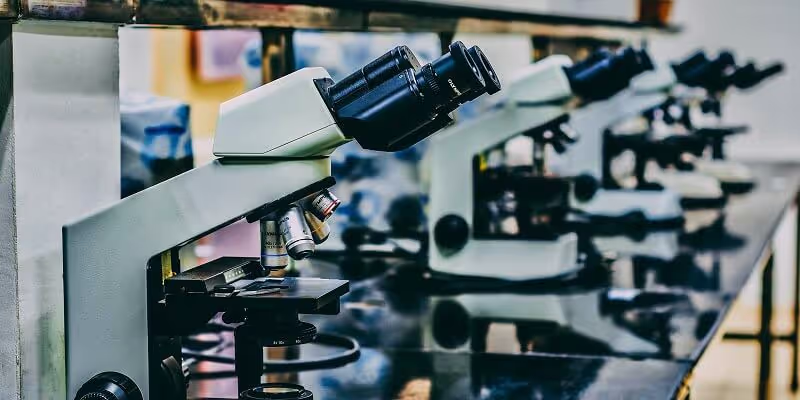

Examples of qualifying activities in medical device development
- Prototype & validation testing Building sensors, wearables, embedded systems, robotics, new materials/components, bench tests and performance trials.
- Software/firmware development Embedded code validation, sensor‑fusion algorithms, connectivity modules, remote monitoring integrations.
- Materials and biocompatibility innovation New composites, coatings, sterilisation protocols, reliability testing, manufacturing process adaptations.
- Human‑factors and usability engineering Iterative design for patient use, ergonomic testing, connectivity interface trials, remote‑monitoring workflows.
- Manufacturing & automation innovation Automated assembly, robotics integration, custom tooling, side‑by‑side process benchmarking, yield improvement testing.
- Regulatory testing & clinical validation support Bench‑to‑clinical translation, side‑by‑side performance comparisons, lifecycle testing, failure‑mode analysis.
What qualifies as R&D in medical device development?
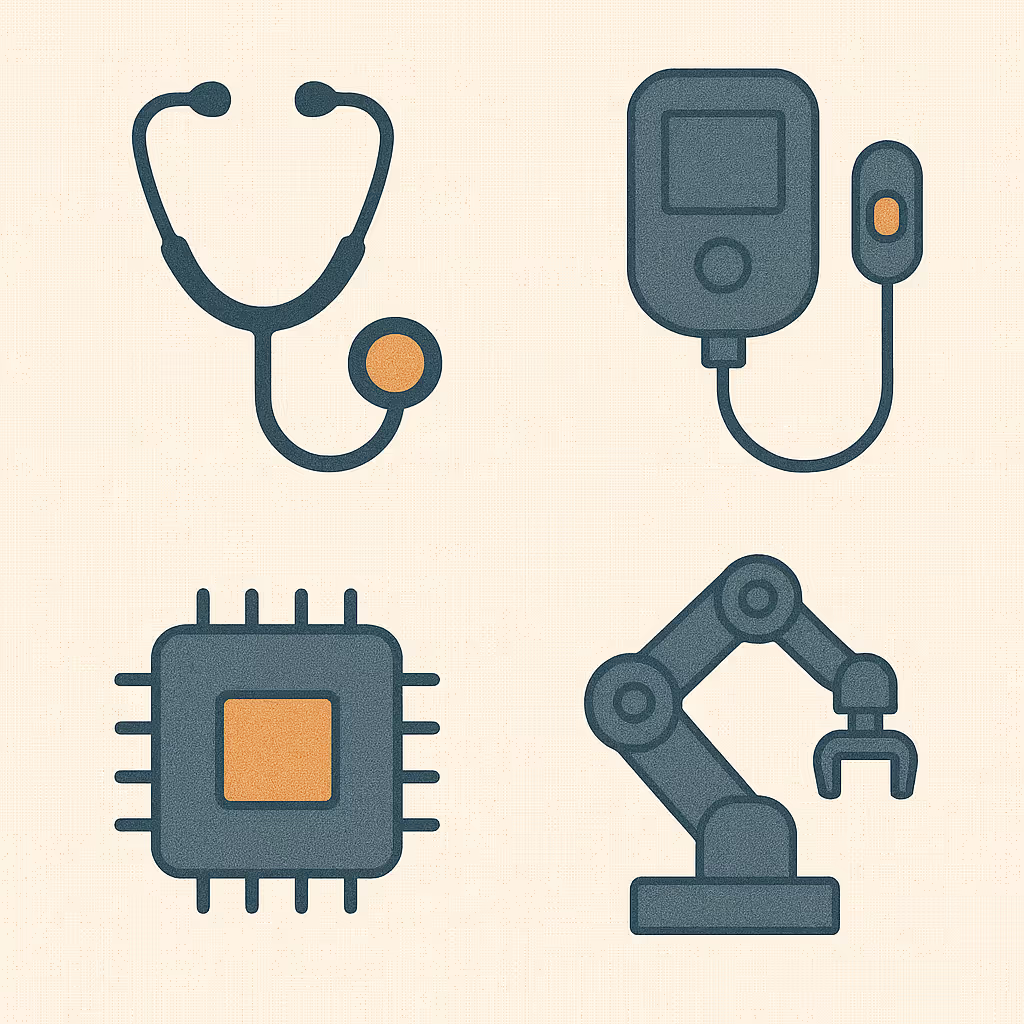
To qualify, your device‑related activities must:
- Aim at a permitted purpose — such as a new or improved medical device, sensor system, embedded software module, connectivity interface, ergonomic design or automated manufacturing process.
- Tackle technical uncertainty — for example: “Can this new sensor reliably detect physiological signals under varied patient conditions?”, “Will the embedded firmware maintain data integrity and meet regulatory standards?”, “Can the manufacturing process scale without unacceptable defect rates?”
- Use a process of experimentation — prototype development, bench testing, clinical usability trials, firmware iterations, side‑by‑side benchmarking of alternative designs or materials.
- Be technological in nature, grounded in mechanical/electrical engineering, software/firmware engineering, materials science, human‑factors engineering or manufacturing automation.
Qualified Research Expenses (QREs)
Roles commonly involved in qualifying activities
- Mechanical, electrical, software and firmware engineers
- Materials scientists/chemists, test and reliability engineers
- Human‑factors/UX specialists, usability engineers
- Regulatory engineers supporting validation and testing
- Project leads coordinating device prototyping, trials and iterations
What does not qualify
- Routine manufacturing of existing devices without innovation or experimentation
- Standard assembly, production or manufacturing tasks without documented research
- Purely administrative, marketing or sales operations
- Purchase of standard manufacturing equipment not tied to a documented R&D program
Compliance and Documentation
Following the One Big Beautiful Bill Act (OBBBA) signed July 4, 2025, §174 now allows immediate expensing of domestic research expenses for tax years beginning on or after January 1, 2025. Taxpayers may also elect optional amortization under new §174A. Foreign research expenses must still be amortized over 15 years. This is separate from the §41 credit but impacts overall tax planning.
Use detailed records:
- Prototype design version history, CAD/engineering files, test results, human‑factors study logs
- Firmware/software version logs, simulation results, bench/clinical comparison data
- Manufacturing pilot run logs, automation workflow trials, yield/scrap analytics
- Employee time logs tied to R&D projects, supply usage tied to experiments, iteration history including failed designs Maintaining this documentation supports audit readiness and the four‑part test.
Frequently Asked Questions
Yes — when they develop new or improved devices, embedded software/firmware, sensor/hardware systems, manufacturing processes or usability workflows rather than just producing existing devices.
Wages of engineers/scientists working on R&D tasks, prototype materials, software/simulation tools, contract research for usability/validation or automation testing.
Routine device production without innovation, assembly of existing designs without change, general business operations or sales, machine purchases not part of a trial or experiment.
Maintain prototype iteration logs, test/bench results, simulation/firmware version histories, employee time by R&D task, supply usage tied to experimentation.
Next Steps

Use our calculator to estimate your potential federal and state benefits

Schedule a consultation to structure your row crop research activities
If you are innovating in agriculture, you may already be doing R&D. Let's make sure you are rewarded for it.
Contact Strike Tax Advisory
Ready to maximize your R&D tax credits? Get in touch with our team of experts.

How much could I get back for
Medical Devices
?