Maximize innovation in analytical testing and lab services. Analytical research laboratories across the U.S. routinely design new assays, characterize reference materials, and optimize protocols. Many of these activities qualify for the federal R&D Tax Credit under IRC §41 (and related rules), with additional opportunities at the state level.
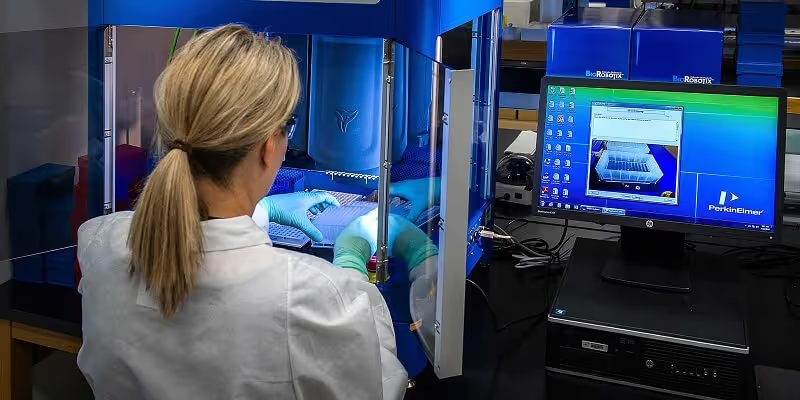

Examples of qualifying activities in analytic research laboratories
- Assay and Method Development Developing or refining analytical assays (e.g., potency, purity, contaminant detection) to handle new matrices or regulatory demands.
- Reference Standard Creation & Characterisation Creating new reference materials, calibrants, or standards for bioavailability, bioequivalence, or material characterisation.
- Automation & Instrumentation Integration Implementing novel automation, robotics, custom instrumentation workflows, or integration of new sensor/control systems in the lab.
- Formulation/Material Challenge Solutions Resolving analytical or formulation issues such as interference from new compounds, matrix effects, or novel material interactions.
- High‑throughput/Parallel Testing Workflows Benchmarking high‑throughput screening of analytical methods, multiplex assays, or side‑by‑side method comparisons.
- Regulatory & Emerging Technology Adaptation Testing analytical pipelines for new therapeutic modalities (e.g., peptides, biologics, novel materials), new regulatory standards or emerging instrumentation techniques.
What qualifies as R&D in analytic research laboratories?

To qualify, activities must:
- Pursue a permitted purpose such as a new or improved assay, analytical method, reference material, protocol, or workflow
- Address technical uncertainty about capability, method, design, reproducibility, or measurement accuracy
- Follow a process of experimentation through trial method development, benchmarking, validation, or automation integration
- Be technological in nature, grounded in analytical chemistry, materials science, instrumentation engineering, biotechnology or laboratory automation
Qualified Research Expenses (QREs)
The U.S. tax rules allow for several categories of Qualified Research Expenses (QREs):
Roles commonly involved in qualifying activities
- Analytical chemists/scientists
- Materials scientists/engineers
- Laboratory automation and instrumentation engineers
- Research scientists and method development experts
- QA/QC personnel working on novel reference materials or protocols
- Project managers coordinating trials and development studies
- Third‑party research partners or CROs supporting analytic method work
What does not qualify
- Routine assays or standard testing services without significant change, novelty or uncertainty
- General operational, administrative, sales or marketing tasks
- Applying already proven methods at scale without method development or experimentation
- Land acquisition or standard capital improvements not tied directly to research development
Compliance and Documentation
Following the One Big Beautiful Bill Act (OBBBA) signed July 4, 2025, §174 now allows immediate expensing of domestic research expenses for tax years beginning on or after January 1, 2025. Taxpayers may also elect optional amortization under new §174A. Foreign research expenses must still be amortized over 15 years. This is separate from the §41 credit but impacts overall tax planning.
Documentation requirements remain rigorous. Maintain clear records of:
- Method development plans, experimental design, hypotheses and protocol versions
- Instrumentation data, assay validation, side‑by‑side trial results, problem logs
- Employee time and wage tracking for participating staff
- Consumable usage, material lots, reference standard development and test logs Strong contemporaneous documentation supports the IRS four‑part test and audit readiness.
Frequently Asked Questions
Yes – labs that develop new analytical methods, create novel reference standards, automate instruments, or solve technical measurement uncertainties may qualify.
Wages of scientists and engineers performing the work, consumables and materials used directly in research, data‑analysis software or cloud tools, and contract research support.
Labs engaged in custom analytical development (e.g., environmental, pharmaceutical, materials testing, biotech) that perform experiments beyond routine testing qualify. Standard contract testing alone may not.
Simple routine testing services, repeat commercial assay runs without new development, general administrative or commercial operations.
Savings vary significantly by lab size, scope and documentation. Some analytic research labs realise six‑figure credits annually when method development, automation integration and novel assay work are documented.
Track method design, experimental protocols and validation data; maintain logs of trial runs, instrument modifications, and employee time allocations; retain consumable usage records and project summaries to substantiate method development and technical uncertainty.
Next Steps

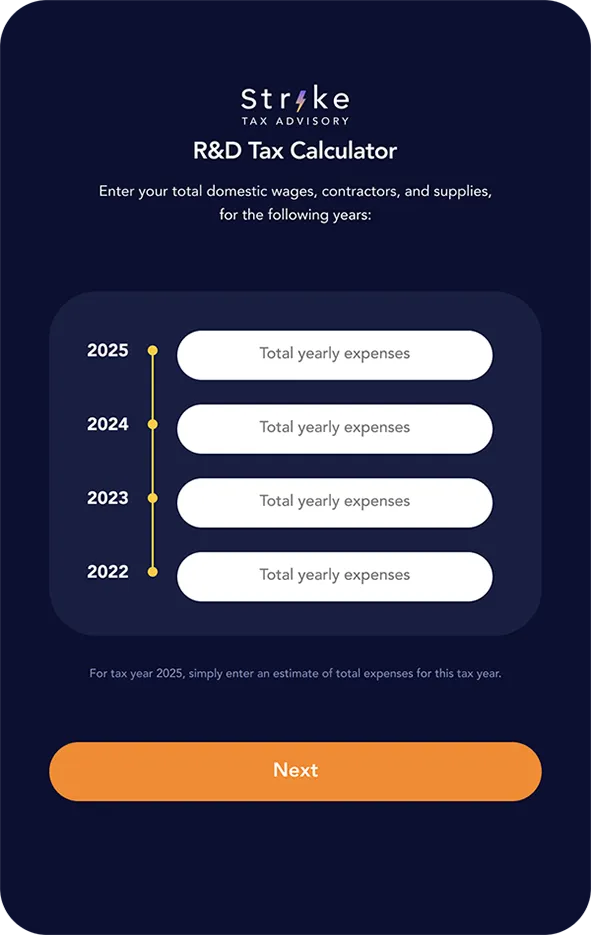
Use our calculator to estimate your potential federal and state benefits

Schedule a consultation to structure your row crop research activities
If you are innovating in agriculture, you may already be doing R&D. Let's make sure you are rewarded for it.
Contact Strike Tax Advisory
Ready to maximize your R&D tax credits? Get in touch with our team of experts.

How much could I get back for
Analytic Research Laboratories
?