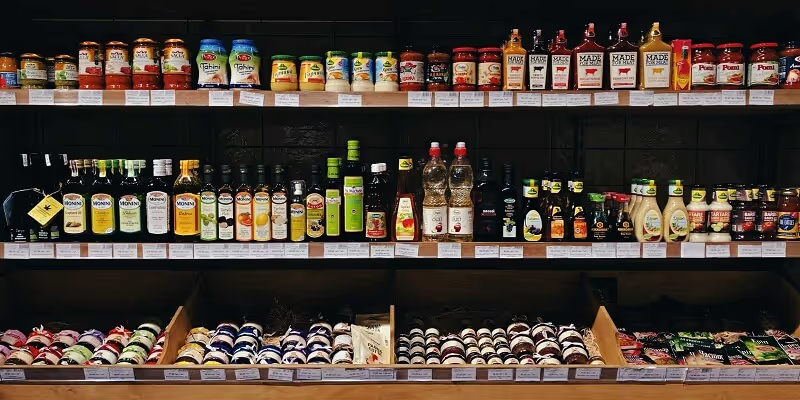
Drive innovation in packaged‑foods production. Packaged‑foods manufacturers across the U.S. are developing new formulations (clean‑label, allergen‑free, plant‑infused), packaging formats (lightweight, barrier films, eco‑packaging), efficient production lines, and new distribution solutions — many of these efforts are eligible under the federal R&D Tax Credit (IRC §41) as well as state‑level incentives.

Examples of qualifying activities in packaged foods
- Formulation Innovation Developing clean‑label snacks, allergen‑free meals, fortified foods with plant‑based proteins, or new texture systems (e.g., crispy after freeze/thaw).
- Packaging System & Material Trials Testing new barrier films, eco‑packaging (biodegradable, compostable), lightweight cartons, improved seal systems, hybrid materials, testing under transportation/consumer conditions.
- Production Line Efficiency Introducing new fill‑lines, rapid change‑over for SKUs, robotic handling, sensor‑based quality control for package integrity, reducing waste/scrap through process redesign.
- Shelf‑Life, Storage & Distribution Innovation Shelf‑life extension via packaging, new preservative‑free systems, distribution‑conditioning packaging designs (e.g., MAP, vacuum skin, reclosable formats); logistics trials to reduce transit time or packaging damage.
- Sustainability & Supply‑Chain Advances Trials to reduce packaging weight, enable recycling, increase recycled‑content films, reduce carbon footprint of shipping/handling, test alternative supply‑chain packaging solutions.
What qualifies as R&D in Packaged Foods?
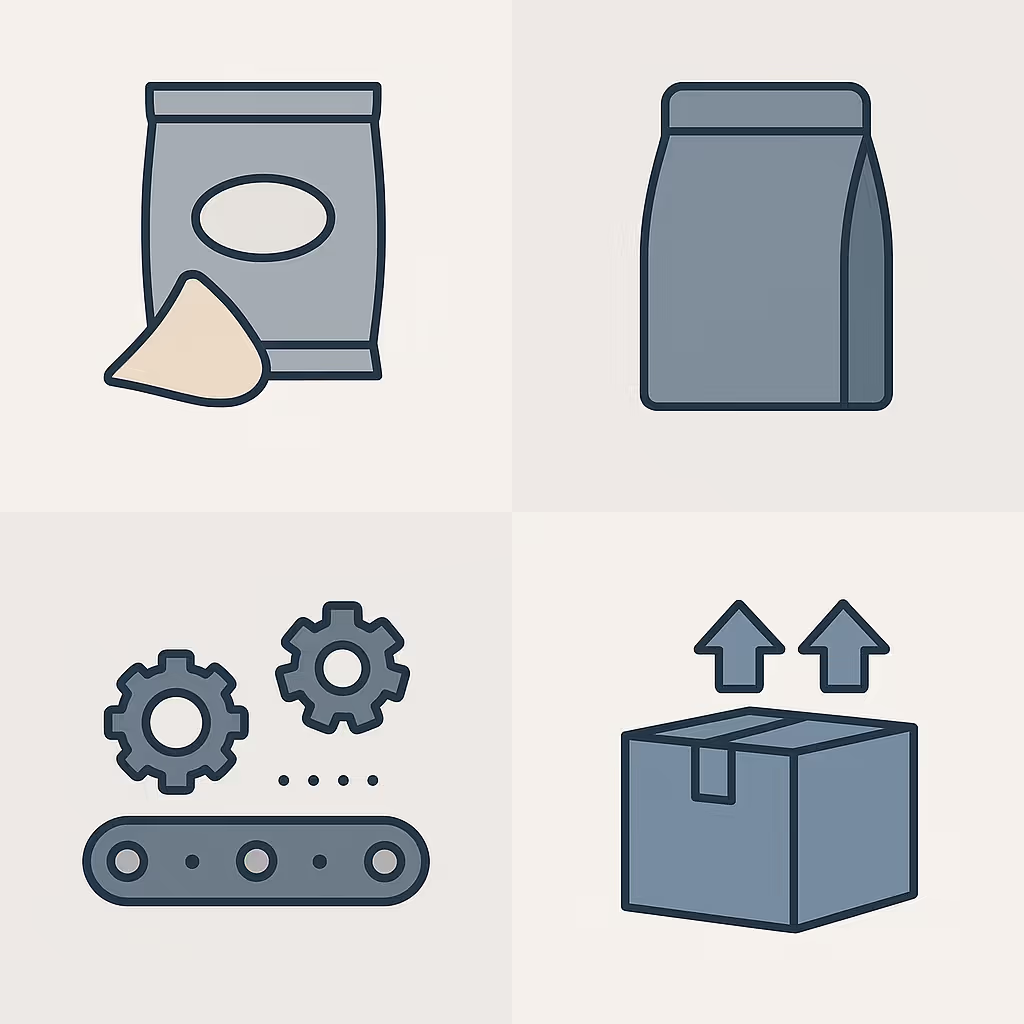
To qualify, packaged‑foods operations must:
- Target a permitted purpose — such as a new or improved snack/meal product formulation, novel packaging or fill method, faster production line, or innovative distribution/transport packaging.
- Involve technical uncertainty — e.g., “Will the new low‑sugar recipe retain texture and consumer acceptance?”, “Can the barrier pouch maintain freshness for 18 months under shelf‑distribution with 90 %RH at 90 °F?”, “Will the new fill‑line reduce change‑over time to under 5 minutes while maintaining seal integrity?”
- Use a process of experimentation — lab/bench runs of formulation, pilot packaging change‑over trials, fill‑line trials, shelf‑life testing, packaging‑material testing, production‑line layout experiments.
- Be technological in nature, based on food‑science, packaging‑engineering, automation/process engineering, materials science, or distribution logistics design.
Qualified Research Expenses (QREs)
Roles commonly involved in qualifying activities
- Product development scientists focusing on formulation/textures
- Packaging/material engineers for new formats
- Automation/control engineers for production lines
- Quality Assurance/R&D technicians handling pilot runs and testing
- Process/manufacturing engineers improving throughput and change‑over
- External testing or packaging‑material labs and consultants
What does not qualify
- Routine production or packaging of existing products without experimentation
- General business functions such as marketing, sales, administrative work
- Applying an established packaging/material system without addressing technical uncertainty or conducting trials
- Standard facility expansion or machinery purchase for scale‑up without a research/trial component
Compliance and Documentation
Following the One Big Beautiful Bill Act (OBBBA) signed July 4, 2025, §174 now allows immediate expensing of domestic research expenses for tax years beginning on or after January 1, 2025. Taxpayers may also elect optional amortization under new §174A. Foreign research expenses must still be amortized over 15 years. This is separate from the §41 credit but impacts overall tax planning.
Packaged‑foods firms should maintain documentation such as:
- Project briefs identifying technical uncertainties (e.g., new packaging film performance targets, line change‑over time reduction targets)
- Pilot‑line test runs, packaging trials, raw‑material/packaging iterations, packaging‑film test results, shelf‑life data
- Time‑tracking and payroll records for R&D and trial‑related personnel
- Material/film test reports, software output/logs, version logs of process changes
- Summary reports of alternatives considered, experiments run, results achieved and decision‑making rationale
Frequently Asked Questions
Yes — if the company is performing research or experimentation on new or improved formulations, packaging materials or production/distribution processes rather than routine manufacturing.
Wages for R&D/pilot staff, supplies/prototype materials (packaging, raw mixes), software/data tools, and third‑party contractor or lab costs connected to qualifying experiments.
Examples include: clean‑label reformulation, new barrier packaging trials, lightweight or compostable packaging pilots, automated fill‑line change‑over trials, shelf‑life extension via packaging innovation.
Standard production, scaling of existing formats without experimentation, routine fill‑line operations without process change, or administrative/marketing tasks.
Savings vary based on survey size and scope, but many firms in food & beverage industrial innovation capture credits in the ~20‑30% of QREs range when properly documented.
Keep detailed documentation: project hypotheses, pilot‑run logs, packaging test results, change‑over/throughput data, payroll/time records for R&D staff, material test certificates, simulation/model‑software output, and summaries showing experimentation and outcomes.
Next Steps

Use our calculator to estimate your potential federal and state benefits

Schedule a consultation to structure your row crop research activities
If you are innovating in agriculture, you may already be doing R&D. Let's make sure you are rewarded for it.
Contact Strike Tax Advisory
Ready to maximize your R&D tax credits? Get in touch with our team of experts.

How much could I get back for
Packaged Foods
?