Drive innovation across product formulas, packaging systems and manufacturing processes. Consumer packaged‑goods companies (food & beverage, personal care, home‑care, household & hygiene, small appliances) in the U.S. routinely test new formulations, packaging designs, production methods and sustainability initiatives — many of which qualify for the federal R&D Tax Credit under IRC §41 and matching state credits.
.avif)

Examples of qualifying activities in CPG manufacturing
- Formula & Product Development Developing new beverage formulations (e.g., functional ingredients, plant‑based alternatives), extending shelf‑life, reducing sugar/salt, improving texture/flavour, sensory‑lab testing and pilot runs.
- Packaging & Filling System Innovation Designing a novel multi‑layer film for snack packaging, testing new high‑barrier pouches, evaluating lightweight bottles/caps, adapting filling/packaging lines to new formats, conducting shelf‑life and transport‑stress testing.
- Manufacturing/Process Improvement Modified mixing/blending systems for new formulations, adapting line equipment for new viscosities, installing rapid‑change over capabilities for seasonal SKUs, integrating sensors/IoT for yield monitoring, pilot‑run data analytics.
- Sustainability & Lifecycle Projects Reducing packaging weight, introducing recycled or compostable materials, evaluating new cleaning/disinfection methods for shared lines, piloting waste‑water or energy‑reduction systems in production.
What qualifies as R&D in the CPG industry?

To qualify, your CPG activities must:
- Aim at a permitted purpose — such as a new or improved product formula, a novel container/packaging design, a manufacturing line adaptation for new SKU formats, or a sustainability/touch‑point improvement (e.g., lower water use, recyclable packaging).
- Tackle technical uncertainty — for example: “Will this new dairy‑free snack remain stable for 12 months under ambient conditions?”, “Can this new multilayer packaging film maintain barrier performance while reducing material weight by 20%?”, “Will a modified filling line efficiently handle a thinner‑viscosity personal‑care formula without increased downtime or waste?”
- Use a process of experimentation — pilot‑scale runs, formulation batches, packaging prototype trials, line conversions, comparative testing across variables, analytics of performance/consumer feedback.
- Be technological in nature — grounded in chemical/food science, materials engineering, mechanical/process engineering, automation systems, packaging materials technology or software analytics.
Qualified Research Expenses (QREs)
For CPG companies, key expense categories include:
Roles commonly involved in qualifying activities
- Product formulators, food scientists, chemical technologists
- Packaging/materials engineers designing new containers or films
- Automation/process engineers installing or adapting line equipment for new SKUs or formats
- Quality/Assurance test staff running shelf‑life, sensory, durability or transport tests
- Sustainability engineers leading material‑reuse or waste/energy‑reduction pilots
- External research/materials labs providing specialist testing or analytics
What does not qualify
- Routine formula tweaks for seasonal flavours without experimentation or technical uncertainty
- Standard packaging usage of existing materials and equipment without new testing/trials
- General business functions: marketing, sales, administrative tasks, order‑fulfilment operations
- Purchasing standard equipment for scale‑up without a research design/test program
Compliance and Documentation
Following the One Big Beautiful Bill Act (OBBBA) signed July 4, 2025, §174 now allows immediate expensing of domestic research expenses for tax years beginning on or after January 1, 2025. Taxpayers may also elect optional amortization under new §174A. Foreign research expenses must still be amortized over 15 years. This is separate from the §41 credit but impacts overall tax planning.
Recommended documentation for CPG R&D:
- Project outlines (e.g., “Reduce packaging film weight by 25% while maintaining barrier to oxygen at ≤0.1 cc/m²·day”, “Pilot run a new plant‑based snack formulation with shelf‑life target of 9 months”)
- Pilot/trial logs: formulation test results, packaging prototype data, filling/line run sheets, change‑over logs, yield data
- Time‑tracking of R&D, pilot‑run personnel, engineers supporting experiments
- Materials/test equipment invoices, sensor/monitoring data, version history of formulations or containers, failed trials logs
- Summary of alternatives considered, iterations, outcomes, and next steps — even unsuccessful trials support the experimentation requirement
Frequently Asked Questions
Yes — if your company is researching or developing new product formulations, packaging formats, manufacturing line conversions, sustainability improvements or other experimental projects rather than routine production.
Wages of product‑development, packaging or process engineers; supplies used in trial formulations or pilot packaging; software/data‑analytics tools for experimentation; external contract research labs or pilot‑line vendors engaged in testing.
Developing a new beverage with functional ingredients, running shelf‑life/ sensory tests, designing a new lightweight or recycled packaging film, adapting a filling line for a thinner or higher‑viscosity formula, integrating IoT sensors for yield/quality monitoring.
Simple flavour/colour changes without technical uncertainty, production of existing formulas or packaging without new testing/trial, general business/marketing tasks, scale‑up equipment purchases without an experimental program.
Credits vary by project size and documentation; many companies in this sector that properly document their research see credits around the ~20‑22% range of their qualified research expenses (federal + state) when fully optimised.
Record hypothesis/objectives (e.g., “Will new polymer film maintain barrier performance after 50 drop tests and 6 months ambient storage?”), track pilot runs, record failures/iterations, log engineer/sci‑tech time, save material/test invoices, run change‑over/yield data, collect summary of lessons learned.
Next Steps

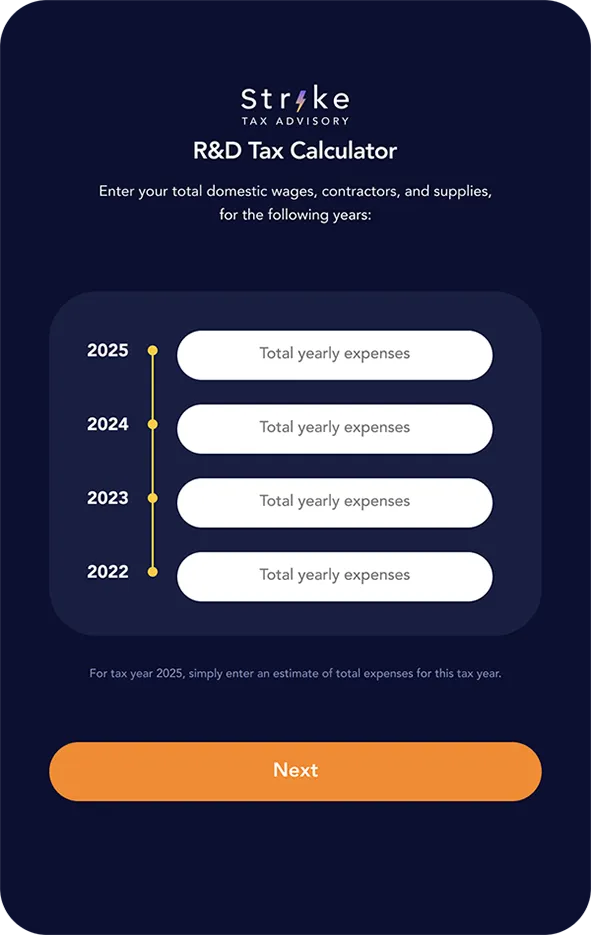
Use our calculator to estimate your potential federal and state benefits

Schedule a consultation to structure your row crop research activities
If you are innovating in agriculture, you may already be doing R&D. Let's make sure you are rewarded for it.
Contact Strike Tax Advisory
Ready to maximize your R&D tax credits? Get in touch with our team of experts.

How much could I get back for
Consumer Packaged Goods
?