Unlock growth in robotics manufacturing. Robotics companies across the U.S. are engineering new robotic systems, advanced sensors, control software, machine learning integration and automation for multiple sectors. Many of these activities qualify for the federal R&D Tax Credit under IRC §41, plus state‑level benefits.
.avif)

Examples of qualifying activities in robotics manufacturing
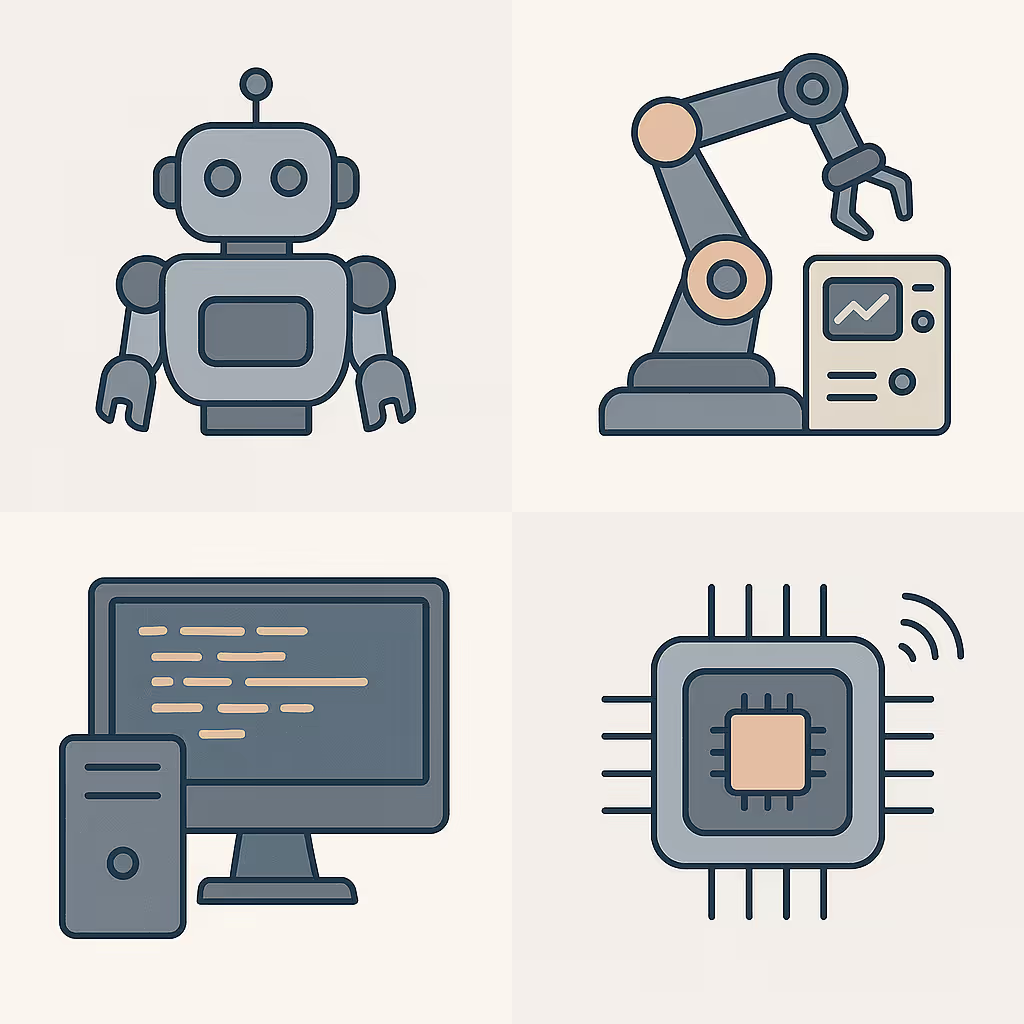
- Hardware & Prototype Development Designing and testing new actuators, robotic arms, grippers, sensors, and first‑article machines.
- Control Software, AI & Automation Integration Developing machine‑learning control systems, autonomous navigation, vision systems, multi‑robot coordination, or advanced user interfaces.
- Manufacturing & Tooling Innovations Building novel jigs, fixtures, robot‑specific tooling, automated assembly cells, or new robotics‑friendly production modules.
- Sensors, Data Analytics & Industry 4.0 Applications Implementing sensor networks on robot systems, predictive maintenance analytics, digital twin modelling of robot behaviour or motion optimisation.
- Custom Solutions & Client‑Specific R&D Developing unique robotic systems tailored to customer problems in healthcare, logistics, manufacturing or service robotics.
What qualifies as R&D in Robotics Manufacturing?
To qualify, activities must:
- Pursue a permitted purpose such as developing a new robot platform, control system, sensor system, or automation solution
- Address technical uncertainty about capability, method or design in mechatronics, AI, controls engineering or systems integration
- Follow a process of experimentation through prototyping, software/hardware testing, sensor integration or system validation
- Be technological in nature, grounded in electrical engineering, mechanical engineering, software engineering or AI
Qualified Research Expenses (QREs)
Roles commonly involved in qualifying activities
- Robotics/mechatronics engineers
- Software and AI engineers
- Mechanical/electrical engineers working on actuation and sensing
- Automation and manufacturing engineers integrating robot systems
- External research partners, prototype labs and testing facilities
What does not qualify
- Producing robots without innovation (i.e., routine manufacturing)
- Applying off‑the‑shelf robots without modification or testing
- General administrative, marketing or sales tasks
- Equipment purchases for standard production not tied to experimentation
Compliance and Documentation
Following the One Big Beautiful Bill Act (OBBBA) signed July 4, 2025, §174 now allows immediate expensing of domestic research expenses for tax years beginning on or after January 1, 2025. Taxpayers may also elect optional amortization under new §174A. Foreign research expenses must still be amortized over 15 years. This is separate from the §41 credit but impacts overall tax planning.
- Project descriptions, objectives, hypotheses, test plans
- Prototype logs, simulation runs, sensor data, motion tests
- Comparative data (baseline vs improved)
- Employee time tracking and role documentation
- Demonstration of the four‑part test for each project
Frequently Asked Questions
Yes — if you’re developing or experimenting with new robotic systems, sensors, control software or automation methods rather than simply assembling standard machines.
Wages of engineers, prototype supplies, software modelling tools, and contract research tied to experimentation.
Manufacturers of industrial robots, service robots (logistics, health, inspection), autonomous systems, and integrators innovating new capabilities.
Routine production lines, standard installations without change, purely post‑production functions, non‑technical tasks.
Savings depend on scale and location; firms routinely claim credits covering a significant percentage of qualified research expenses.
Document prototype builds, software versions, testing logs, sensor data, automation iterations, time sheets for experimental work.
Next Steps

Use our calculator to estimate your potential federal and state benefits

Schedule a consultation to structure your row crop research activities
If you are innovating in agriculture, you may already be doing R&D. Let's make sure you are rewarded for it.
Contact Strike Tax Advisory
Ready to maximize your R&D tax credits? Get in touch with our team of experts.

How much could I get back for
Robotics Manufacturing
?