Advance critical defense and security technologies. U.S. companies in the firearms, ammunition, advanced munitions or missile‑defense sectors are innovating lightweight systems, smart munitions, directed‑energy interceptors and more. Many of these R&D efforts qualify for the federal R&D Tax Credit under IRC § 41 as well as state incentives. striketax.com


Examples of qualifying activities
- Smart ammunition & guided projectiles: Prototypes with embedded sensors, micro‑electronics, target acquisition, trajectory correction systems.
- Missile interceptor/defense systems: Propulsion advances, seeker algorithms, multi‑sensor fusion, directed‐energy or hit‑to‑kill systems, interceptor agility, high‑survivability materials.
- Lightweight materials & coatings for munitions: Advanced metallurgy, composite casings, heat‐shielding for missiles, additive manufacturing of complex geometries.
- Firearms & small‑arms innovation: Modular weapon systems, advanced recoil mitigation, biometric or smart‑targeting integration, network‑connected weapons platforms (where legal).
- Manufacturing process R&D: Automation in ammo production, high‑precision tooling, additive manufacturing of warheads, novel feed systems or rapid‑production techniques.
- Live‑fire testing & ballistics validation: High‑velocity ballistic trials, environmental qualification of seeker/sensor systems, material stress/fatigue tests.
What qualifies as R&D in this sector?
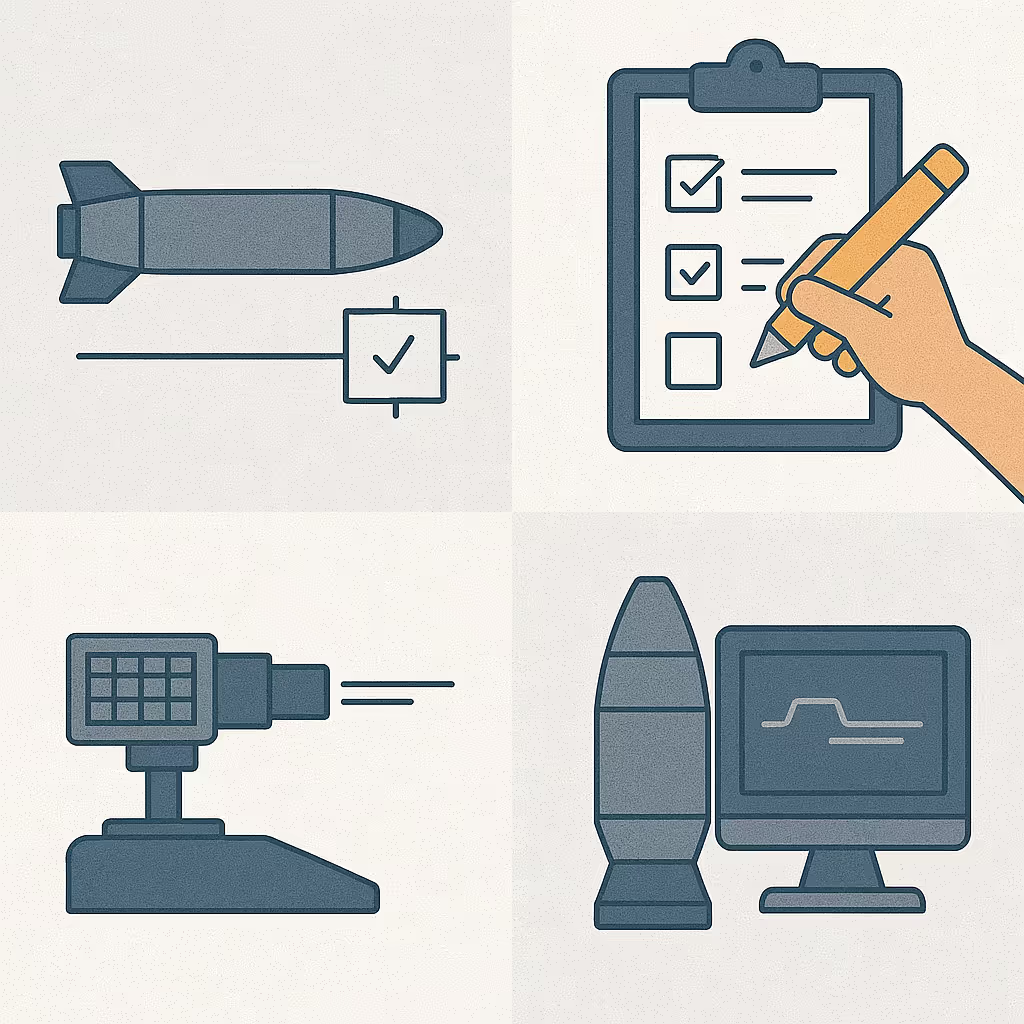
Your activities may qualify if they:
- Aim at a permitted purpose — e.g., a new smart projectile, guided interceptor architecture, lightweight defense materials, additive‑manufactured munitions or weapon subsystems.
- Address technical uncertainty — such as: “Can we integrate micro‑electronics and sensor systems within a projectile while maintaining structural integrity?”, “Will the directed‑energy system survive necessary thermal cycles and power loads?”, “Can we manufacture a lightweight warhead casing via additive manufacturing and still meet performance specs?”
- Follow a process of experimentation — prototypes, ballistics test trials, material/ballistic testing, guidance/algorithm development, sensor integration, redesigns following test failure.
- Are technological in nature — grounded in mechanical/ballistics engineering, materials science, electronics, software/systems integration.
Qualified Research Expenses (QREs)
Roles commonly involved
- Ballistics and weapons engineers
- Materials scientists and metallurgists
- Guidance/controls engineers, electronics & sensor engineers
- Test engineers, automation/tooling engineers
- Manufacturing process improvement specialists
What does not qualify
- Routine production of standard weapons or ammunition without innovation/testing
- Administrative, marketing or general logistic tasks
- Off‑the‑shelf system usage without redesign/testing
- Capital investments not tied directly to experiment‑based R&D
Compliance and Documentation
Following the One Big Beautiful Bill Act (OBBBA) signed July 4, 2025, §174 now allows immediate expensing of domestic research expenses for tax years beginning on or after January 1, 2025. Taxpayers may also elect optional amortization under new §174A. Foreign research expenses must still be amortized over 15 years. This is separate from the §41 credit but impacts overall tax planning.
§174 Update With evolving tax‑law treatment of research expenses under §174/§174A, companies in this sector must incorporate these changes into their R&D tax‑planning.
Documentation Best Practices
- Project‑specific technical challenge statements, design hypotheses
- Prototype logs, live‐fire test results, sensor/algorithm iteration data
- Time tracking of engineers/technicians, test‑range data, simulation vs real‑world comparisons
- Engineering change‑control logs, decision‑records, specification‐iterations Strong documentation supports the IRS's four‑part test and strengthens audit‑readiness.
Frequently Asked Questions
Yes — companies that develop new or improved munitions systems, interceptors, weapons platforms or manufacturing methods can qualify when structured correctly.
Wages of engineering/test personnel, prototyping supplies, simulation/model software, contract research tied to experimentation.
Routine production of standard weapons or ammo without innovation/testing, purely administrative tasks, or use of off‑the‑shelf systems without modification/testing.
Savings vary by company size and scope, but many firms claim significant credits when R&D is structured and documented properly.
Use detailed logs of prototypes, live‑fire tests, simulation results, time‑sheets, iteration records and proof of experimentation and uncertainty.
Next Steps

Use our calculator to estimate your potential federal and state benefits

Schedule a consultation to structure your row crop research activities
If you are innovating in agriculture, you may already be doing R&D. Let's make sure you are rewarded for it.
Contact Strike Tax Advisory
Ready to maximize your R&D tax credits? Get in touch with our team of experts.

How much could I get back for
Firearms, Ammunition, & Missile Defense
?