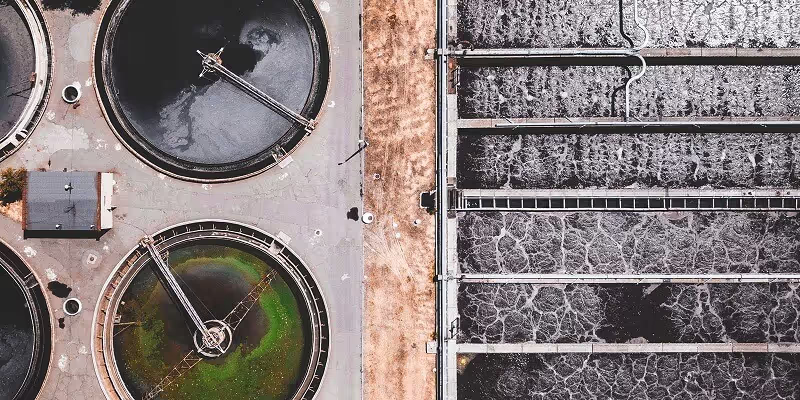
Maximize innovation in environmental engineering. Environmental engineering firms in the U.S. often engage in new remediation technologies, waste‑to‑energy systems, sustainability monitoring, water‑treatment innovations and ecosystem restoration methods. Many of these qualify for the federal R&D Tax Credit under IRC §41, as well as state‑level incentives.

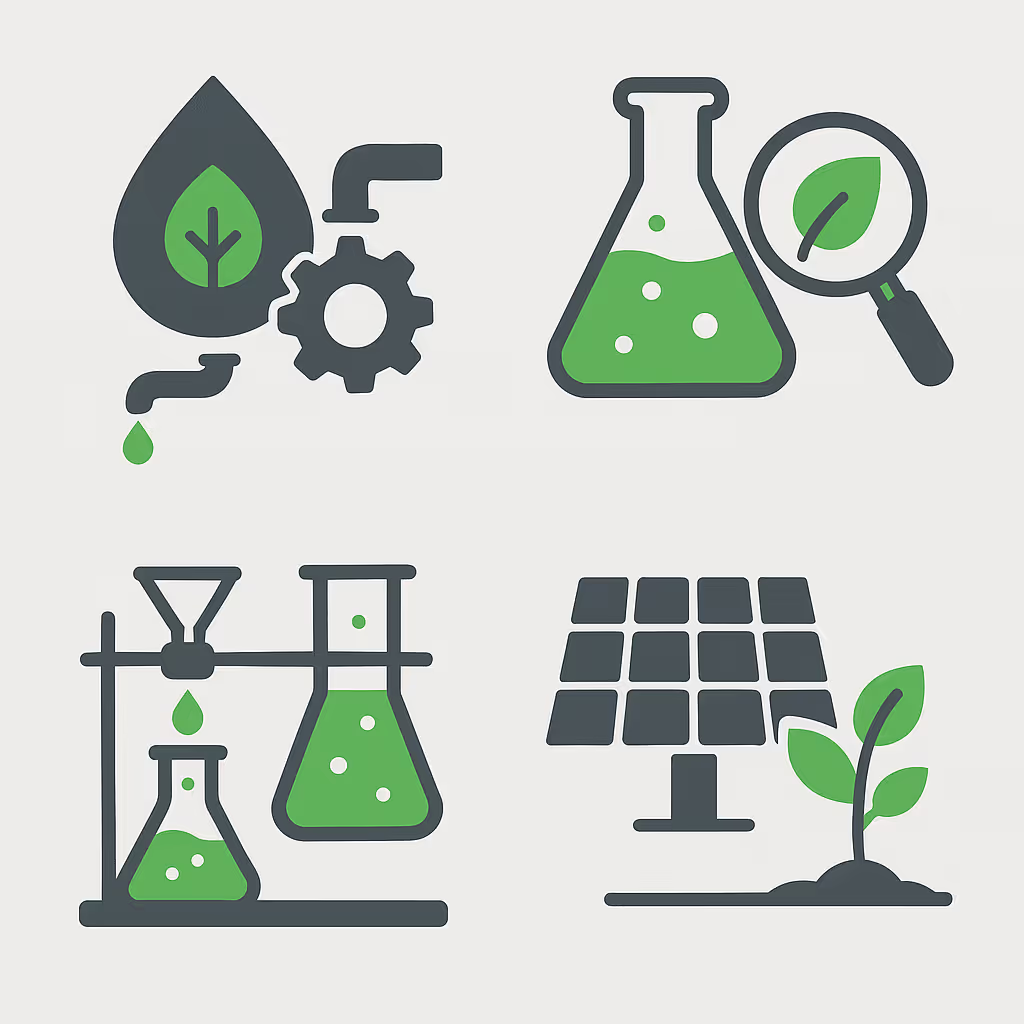
Examples of qualifying activities in environmental engineering
- Water & Waste‑Water Treatment Innovation Pilot testing of advanced membranes, biological treatment systems, new UV/Hydroxyl reactors, novel pollutant removal systems, or resource‑recovery from wastewater.
- Remediation & Soil/Water Cleanup Systems Developing new remediation techniques for contaminated sites, novel bioremediation microbes, in‑situ treatment systems, active monitoring using sensor networks.
- Air Quality & Emissions Control Experimental systems for particulate capture, novel catalytic systems, smart sensor deployment, or adaptive ventilation/treatment in industrial systems.
- Waste‑to‑Energy / Resource Recovery Testing waste conversion technologies, anaerobic digesters, pyrolysis or gasification pilots, or novel recovery of valuable by‑products from environmental processes.
- Ecosystem Monitoring & Data Analytics Deploying advanced sensor networks for environmental monitoring, real‑time data analytics for habitat restoration, climate‑adaptation sensor systems, IoT networks for sustainability.
- Sustainability / Carbon‑Sequestration Systems Pilot projects on carbon capture materials, green infrastructure, bio‑based building materials, urban‑runoff treatment innovation, and lifecycle/embodied carbon systems.
What qualifies as R&D in environmental engineering?
To qualify, activities must:
- Pursue a permitted purpose – developing a new or improved environmental system, remediation method, monitoring process or treatment technology
- Address technical uncertainty regarding how to remove pollutants, treat water/air, monitor ecosystems, or implement sustainable systems
- Follow a process of experimentation – via lab/field trials, pilot plants, simulation or new process modelling
- Be technological in nature, founded on environmental science, chemistry, biology, process engineering, material science, monitoring systems or systems engineering
Qualified Research Expenses (QREs)
Roles commonly involved
- Environmental process engineers and scientists working on new treatment systems
- Field trial coordinators and monitoring engineers installing sensor systems or pilot plants
- Data analytics/sensor networks engineers analysing environmental data
- Materials specialists for novel remediation media or membranes
- Research labs: environmental testing, materials/media fabrication, sensor integration
What does not qualify
- Routine environmental compliance tasks, standard design or treatment using known methods without innovation
- Pure monitoring/reporting work without development of new methods, systems or uncertainty resolution
- Standard construction/deployment of known environmental systems not addressing new technology or method
- Administrative or regulatory tasks without technical uncertainty or research component
Compliance and Documentation
Following the One Big Beautiful Bill Act (OBBBA) signed July 4, 2025, §174 now allows immediate expensing of domestic research expenses for tax years beginning on or after January 1, 2025. Taxpayers may also elect optional amortization under new §174A. Foreign research expenses must still be amortized over 15 years. This is separate from the §41 credit but impacts overall tax planning.
Environmental engineering firms should:
- Maintain narratives that describe the technical uncertainty (e.g., new removal method, sensor network analytics, novel bioremediation approach)
- Collect pilot plant logs, field‑trial data, sensor network output, simulation/modeling results
- Track time spent on research/innovation tasks separate from routine service work
- Retain contracts/scopes showing risk and rights in outcome of research These practices support audit‑readiness under the four‑part test.
Frequently Asked Questions
Yes — when they engage in innovative environmental technologies, remediation methods, sensor networks, resource‑recovery processes or water/air treatment innovations, they may qualify.
Wages of environmental/process engineers, materials for pilot plants or sensors, simulation/data‑analytics software, contract research with test labs.
Examples: new wastewater treatment membrane trials, bioremediation pilot tests, sensor network installations for ecosystem monitoring, waste‑to‑energy pilots, carbon‑sequestration materials.
Standard compliance monitoring or installation of known treatment systems without innovation, purely administrative or reporting tasks, or build‑only deployment without R&D.
Use project narratives describing uncertainty and steps, track time and personnel, collect field logs, sensor/monitor data, simulation results, and link experimental tasks to research objectives.
Varies widely based on innovation scope. Firms that have repeated pilot projects or technology development efforts may capture significant savings; smaller initiatives still offer meaningful credits.
Next Steps

Use our calculator to estimate your potential federal and state benefits

Schedule a consultation to structure your row crop research activities
If you are innovating in agriculture, you may already be doing R&D. Let's make sure you are rewarded for it.
Contact Strike Tax Advisory
Ready to maximize your R&D tax credits? Get in touch with our team of experts.

How much could I get back for
Environmental Engineering
?